https://twisterbicycle.com/the-ultimate-guide-to-smart-home-climate-control-and-air-quality/
The air purifier market is mixed with good and bad, and rumors about formaldehyde removal are even more dazzling. Some people think it’s useless, while others treat it as a ‘universal cure.’ Today we will break these three common misconceptions and teach you how to scientifically view the role of air purifiers in formaldehyde removal.
1. Misconception 1: Air purifiers cannot remove formaldehyde; it is an ‘intelligence tax.’

Many people believe that air purifiers cannot remove formaldehyde and call it an “intelligence tax,” mainly due to three cognitive biases: firstly, mid- to low end air purifiers are often mistakenly believed to only filter particulate matter such as dust and haze due to their simple structure (only including filter element and fan), while in fact, the activated carbon component in their filter element has an adsorption effect on formaldehyde; Secondly, saturated adsorption of activated carbon filters can easily lead to a secondary rebound of formaldehyde, which may make some users mistakenly believe that the purifier is ineffective. However, if the filter is replaced regularly or high-end decomposition technologies (such as potassium permanganate + alumina, UV photocatalytic catalysis) are chosen, secondary pollution can be avoided and formaldehyde can be truly decomposed; In addition, the formaldehyde removal effect is difficult to intuitively perceive, and even with digital display function, it is often difficult for users to detect changes due to inaccurate detection or environmental interference. Functions such as odor removal and allergen removal are easier to perceive, further exacerbating the misconception that “air purifiers are useless”. These misconceptions reflect the public’s insufficient understanding of the principles, usage methods, and presentation methods of purifier technology.
Misconception 2: Air purifiers alone can completely solve formaldehyde problems
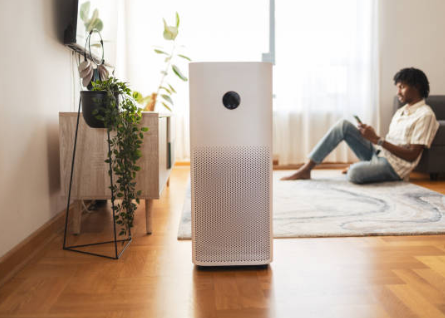
Many people mistakenly believe that air purifiers alone can completely solve the problem of formaldehyde in newly renovated homes, but in reality, this is not the case. In fact, the core method for removing formaldehyde from new houses is to open windows for ventilation for 3-6 months or rely on professional treatment, and air purifiers cannot replace these basic measures. The release cycle of formaldehyde lasts for more than ten years, and its treatment requires a “protracted battle”: ventilation and high-temperature and high humidity confinement methods are the core means to accelerate formaldehyde release, just like the “main output” in games; And air purifiers are more like “auxiliary roles”, which can improve purification efficiency during ventilation and continue to treat residual formaldehyde after occupancy, preventing its accumulation. Therefore, air purifiers are not the main force in formaldehyde treatment, but rather an auxiliary tool for long-term protection of indoor air quality. They need to be combined with ventilation and other methods to maximize their value.
3. Misconception 3: Choose air purifiers with high CADR and CCM values for formaldehyde removal

Many people follow a universal rule of “three highs and one low” when choosing an air purifier, which is CADR CCM. The three major values of purification efficiency are high and the noise is low, but in fact, this rule is not so “universal”, especially for choosing a formaldehyde removal air purifier.
As mentioned above, air purifiers should play an auxiliary role in formaldehyde removal, mainly dealing with the small amount of residual formaldehyde continuously released after moving in. Therefore, the requirement for “attack power” is not particularly high. Even if the CADR value is particularly high, it cannot fully exert its power in the face of a small amount of formaldehyde. Moreover, if the CADR value is high, the frequency of replacing the filter element is relatively high. Therefore, instead of pursuing “three highs and one low,” formaldehyde removal air purifiers should pay more attention to purification technology, filter element service life, and filter element replacement cost.
Air purifiers are not the “savior” of formaldehyde removal, nor are they useless “decorations.” They are practical tools that assist in improving air quality in modern life. In the face of the prolonged battle for formaldehyde control, we need to acknowledge its limitations and recognize its long-term value: accelerating purification on the basis of ventilation and continuously protecting the air after moving in. When choosing an air purifier, there is no need to blindly pursue high prices or parameters, but rather focus on whether its core technology can effectively adsorb or decompose formaldehyde, whether the filter element is durable, and whether the replacement cost is reasonable. Only by incorporating air purifiers into a scientific formaldehyde treatment system can they truly become guardians of healthy breathing. After all, a healthy living environment requires rational choices and persistence, and air purifiers are worth playing the role of silently guarding in it.
https://twisterbicycle.com/the-ultimate-guide-to-smart-home-climate-control-and-air-quality/