
The air fryer has become a new favorite in the kitchen with the labels of “oil-free cooking” and “healthy weight loss,” but the controversy surrounding it has never stopped. Some people believe that it can reduce oil intake, while others are concerned that its high-temperature cooking may produce carcinogens. Today, we will analyze the health differences between air fryers and traditional deep frying from a scientific perspective, and uncover the mystery of this “healthy cooking.”
1. Working principle of air fryer: replace hot oil with hot air
The core principle of an air fryer is to heat the air through a heating element, and then use a built-in fan to form a high-speed circulating hot air flow (usually up to around 200°C). These hot air wraps around the surface of the food, quickly removing moisture and creating a crispy texture similar to frying, while avoiding the use of large amounts of oil in traditional frying. Simply put, it replaces “oil soaking” with “air frying,” retaining the crispness of the food while reducing fat intake.
2. Air fryer vs traditional deep frying: What are the health advantages?
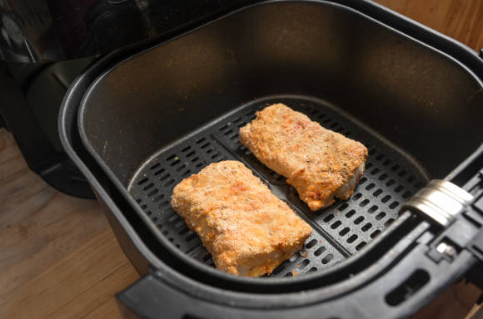
Reduce oil intake
The oil absorption of traditional fried foods can reach over 14%, while air fryers can reduce fat content by about 70% through hot air circulation. Taking French fries as an example, air-fried French fries can reduce 45 calories per 100 grams, and long-term consumption is more beneficial for weight control and cardiovascular health.
Reduce the risk of carcinogens
The controversy surrounding air fryers revolves around whether they produce the carcinogenic substance acrylamide. In fact, acrylamide is a product of the Maillard reaction that occurs in food at high temperatures (>120°C), and is not unique to air fryers. Research has shown that air fryers can reduce the production of acrylamide by 90% compared to traditional frying methods through precise temperature control and uniform heating. In contrast, traditional frying is more prone to producing more harmful substances due to local overheating, as the oil temperature is difficult to control.
Convenience and hygiene
Air fryers do not require the handling of hot oil splashes and residual grease, making cleaning more convenient and reducing the problem of kitchen oil stains. For modern people who pursue efficiency, this is undoubtedly a major sub-item.
3. Potential risks of air fryers: how to avoid health traps?
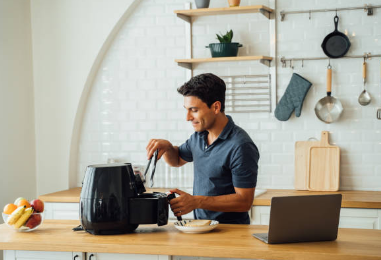
Although air fryers are healthier, the following issues still need to be noted:
Control cooking temperature and time
Long-term cooking at high temperatures may increase the formation of acrylamide. It is recommended to adjust the temperature according to the ingredients (usually 180°C – 200°C is appropriate) and avoid overcooking that can cause food to become burnt.
Choose suitable ingredients
Air fryers are more suitable for cooking meat and vegetables, while starchy foods such as French fries and potato cakes may still produce more acrylamide at high temperatures. It is recommended to reduce the cooking frequency of such foods or soak them in water in advance to remove some starch.
Avoid complete dependence
Although air fryers are healthy, they cannot replace low-oil fume cooking methods such as steaming and boiling. A balanced diet requires diverse cooking methods to preserve the nutrition and flavor of food.
How can an air fryer be healthier?

Finally, I would like to recommend a few key points when using an air fryer. You can pay attention to them when using it—this will make the food cooked through the air fryer healthier
1. Choosing a big brand air fryer will have better temperature control effect and relatively healthier overall
2. When using, cook more meat and less food with high starch content
3. If the size is large, it can be cooked in batches to avoid exceeding the workload of the air fryer
4. Occasionally flip the food to ensure it is evenly heated and ripened, but avoid overcooking it
Air fryers are indeed healthier than traditional deep frying by reducing oil and controlling the generation of carcinogens. It provides a high-quality option for modern people who pursue convenience and health, but it is not absolutely perfect. The key lies in rational use—controlling temperature and time, pairing diverse ingredients, and combining with other healthy cooking methods. After all, no tool can guarantee absolute health; true health comes from scientific dietary concepts and a balanced lifestyle.