
A refrigerator is one of the essential appliances in our daily lives. It not only helps preserve the freshness of ingredients but also allows us to store various foods, making it convenient for family meals. With so many refrigerator brands and models available, how do you choose the one that best suits your needs? Today, we bring you a detailed buying guide to help you make an informed decision when selecting your refrigerator.
1. Types of Refrigerators
The first step in choosing a refrigerator is to determine the type. There are various types of refrigerators, each with unique functions and suitable scenarios. Here are the most common types:
Double-Door Refrigerator: A double-door refrigerator typically consists of an upper refrigerated section and a lower freezer section. It is suitable for general household use, offering moderate capacity, reasonable storage space, and an affordable price.
Triple-Door Refrigerator: A triple-door refrigerator adds an additional independent refrigeration or freezing compartment to the double-door model. It’s ideal for families that need to store a larger quantity of food, especially frozen items.

Side-by-Side Refrigerator: In a side-by-side refrigerator, the refrigerated and frozen sections are symmetrically distributed, offering a large storage capacity. This type is well-suited for large families or users who require extensive food storage. Both the fridge and freezer sections are usually spacious and make organizing and accessing food easier.
Four-Door Refrigerator: The four-door refrigerator offers even more storage space and flexible design, allowing users to adjust the refrigerated and freezing areas as needed. It is perfect for families that require large-capacity storage.
Smart Refrigerator: With technological advancements, smart refrigerators are increasingly common. These refrigerators not only control temperature but also provide food management, voice assistance, remote control, and other functions, making them ideal for families seeking technology and efficiency.
2. Capacity Selection

The capacity of the refrigerator is one of the most important factors to consider when making a purchase. The size of the refrigerator directly determines how much food you can store. The choice of capacity depends largely on the number of people in your household and your food storage needs:
Single or Couple Households: For single individuals or couples, a refrigerator with a capacity of 200L to 300L is typically sufficient. This size provides enough space for daily food storage while occupying less floor space.
Three-Person Household: A refrigerator with a capacity of 300L to 400L is more suitable for a three-person household, providing enough storage for daily food and some backup supplies.
Large Family: For families with four or more members or those who frequently buy large quantities of food, refrigerators with a capacity of 400L or more are recommended. This ensures there’s enough space to store large quantities of food and avoids overcrowding or waste.
3. Cooling Technology
Modern refrigerators use advanced cooling technologies, and the choice of cooling method has a significant impact on the performance and efficiency of the refrigerator. Common cooling technologies include:
Direct Cooling: In direct cooling refrigerators, the freezer is directly connected to the cooling system, providing a lower temperature but leading to ice buildup, which can be inconvenient to clean. This type of refrigerator is suitable for storing small amounts of frozen food and is typically more affordable.
Frost-Free Cooling: Frost-free refrigerators use built-in fans to circulate air evenly, preventing food from freezing and eliminating the frost buildup issue common in direct cooling models. They typically operate quietly and better preserve the freshness of food.
No-Frost Cooling: No-frost refrigerators combine frost-free technology with smart sensing features, adjusting humidity levels to maintain a dry environment inside the fridge. These models not only prevent frost buildup but also preserve the quality of food, reducing the need for frequent cleaning.
4. Energy Efficiency
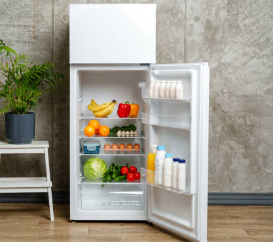
Since refrigerators run 24/7, they consume a significant amount of energy. Therefore, choosing an energy-efficient refrigerator is crucial. When purchasing, pay attention to the refrigerator’s energy efficiency rating, as a higher rating typically means better energy efficiency and lower operating costs.
Energy Efficiency Rating: Currently, refrigerators are rated from 1 to 5 stars, with 1 star being the most energy-efficient and 5 stars indicating higher energy consumption. Opting for a refrigerator with a 1-star or 2-star rating can help reduce long-term electricity bills.
Inverter Technology: Inverter refrigerators adjust the speed of the compressor intelligently, ensuring stable internal temperatures while reducing unnecessary energy consumption. Choosing an inverter refrigerator can improve performance and significantly reduce energy usage.
5. Additional Features
In addition to basic cooling and storage functions, modern refrigerators come with extra features that enhance the overall user experience. Common additional features include:

Ice and Water Dispenser: Some refrigerators come equipped with ice and water dispensers, allowing you to have ice cubes or cold water on demand—ideal for hot summer months.
Smart Controls: Smart refrigerators support Wi-Fi connectivity, remote control, and other features, allowing you to adjust the temperature and settings from anywhere, even when you’re not at home.
Air Purification System: Some high-end refrigerators are equipped with air purification systems that help eliminate odors inside the fridge, keeping food fresh and free from unwanted smells.
Choosing the right refrigerator is a decision that requires careful consideration of personal needs. By understanding the refrigerator’s type, capacity, cooling technology, energy efficiency, and additional features, you can select the best refrigerator for your home. Be sure to also take into account your budget, brand preferences, and after-sales service. We hope this buying guide helps you pick a refrigerator that is both practical and efficient, making your daily life more convenient and comfortable!