https://twisterbicycle.com/the-ultimate-guide-to-tv-wall-design-elevating-comfort-and-aesthetics/
Why is TV wall design so crucial?
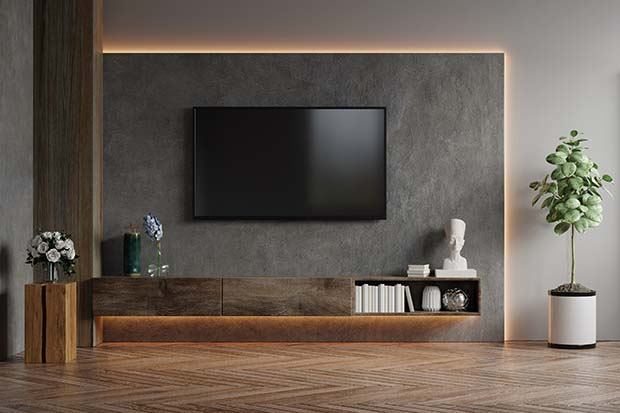
We often say that “the sofa is the soul of the living room,” but what truly determines your daily movie-watching experience is often the TV wall. It’s not only the visual center but also the key to setting the atmosphere of the entire home . If the TV wall is designed just right, you’ll clearly feel the difference:
It’s less tiring to look at for extended periods, and puts less strain on your neck.
The space is more harmonious and looks more comfortable;
Electrical wires are kept out of place, and audio-visual equipment has its designated spot.
With just a touch of lighting, the atmosphere for watching a movie is instantly enhanced.
Second, determine the location and height of the TV wall.
1. TV wall mounting height
A simple but often overlooked principle: the center of the TV screen is approximately the same as your eye level when seated .
This way, you’re less likely to get tired while watching TV for extended periods.
Many designers (like DexDecor) give a reference height of approximately 42–48 inches from the ground . Of course, the firmness of different sofas will affect the actual eye level, so it’s normal for your sofa to vary slightly.
In short, one principle: don’t hang it too high . Looking up to watch TV will cause your cervical spine to fail first.
2. How is the viewing distance calculated?
This is something that often gives people a headache. Here are two simple rules:
HD TV: Distance ≈ 1.5–2.5 times the screen diagonal (HelloTech)
4K TVs: Can be closer ≈ 1–1.5 times the screen diagonal (TechRadar)
The reason is simple: the higher the resolution, the harder it is to see individual pixels, allowing you to sit closer and feel more immersed.
Some cinematic references even suggest that the screen should occupy about 30 degrees of your field of vision for a more enjoyable and natural viewing experience.
III. How to choose the material and style of the TV wall?
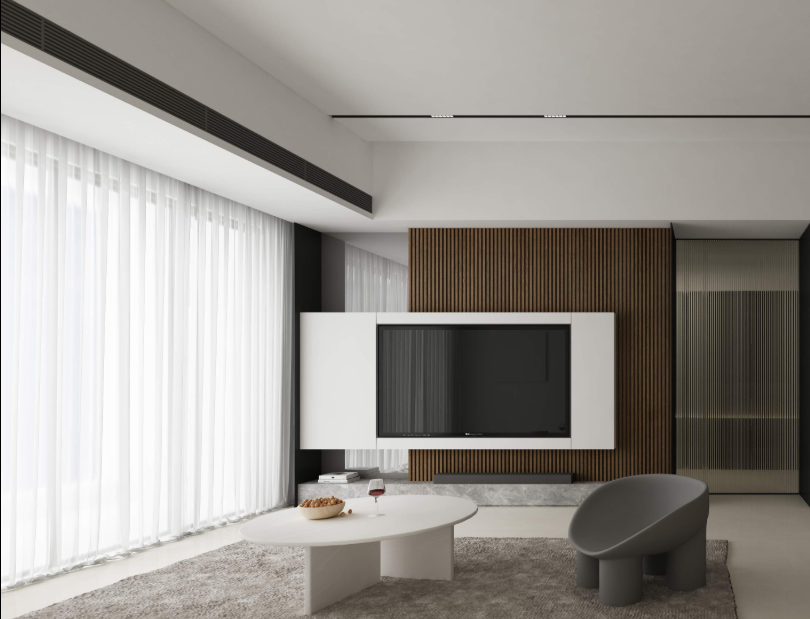
The material of the TV wall often determines the final feel of the space. Different styles give people completely different feelings—and can even affect your perception of the picture.
Modern minimalism : neutral colors such as marble, wood veneer, and latex paint, clean and understated.
Functional TV wall cabinets : combining storage and decoration, brands like ShiniMan emphasize overall design.
A layered minimalist style : plaster moldings, cultural bricks, marble textures… moderation is key; too much will create a cluttered look.
In short: style doesn’t need to be flashy, but it should “converse” with your entire living room.
IV. Lighting Design – A True “Hidden Bonus”
Many people only realize at the end that
the 30% improvement in the viewing experience is not due to the television, but to the lighting.
Top base lighting
The deep-cup anti-glare lamp is the most stable, preventing bright spots from shining onto the screen.
Keeping light fixtures 30–40 cm away from the wall can significantly reduce reflections.
Background light/fill light
The LED backlight strip behind the TV can reduce the contrast between light and dark, making it more comfortable to watch for extended periods.
Floor lamps and table lamps are great for creating ambiance; just turn them on, and the entire space becomes softer for watching movies.
V. Storage and Cable Management: More Important Than You Think
No matter how beautiful the TV wall is, if there are still a bunch of wires on the floor, it’s basically a waste of time.
The recommended approach is:
All audio-visual equipment is integrated into the TV wall cabinet.
cabinet + open cabinet combination:
Enclosed storage of miscellaneous items
Open display of books and ornaments
Hiding electrical wires using cable trays/in-wall wiring/PVC pipes will make the room look much cleaner.
VI. How to choose a TV size? Viewing distance determines everything.
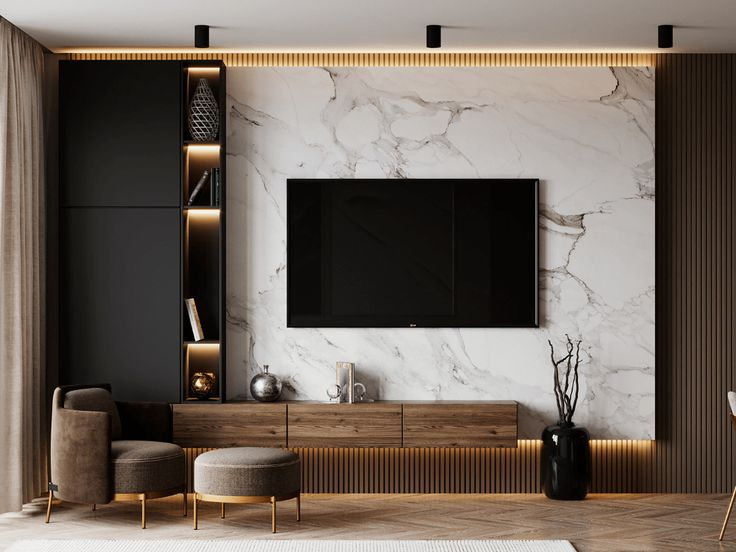
Size is not “the bigger the better”, but “distance determines size”.
You can use the two reference rules directly:
For close viewing (4–5 feet), a 40–50 inch 4K TV is more suitable.
Samsung’s empirical formula: Viewing distance (inches) ÷ 2 = TV size diagonal
The advantage of 4K is that you can sit very close to the camera without it being blurry, so you can be more immersive if you want.
VII. Design Details and Practical Functions
These are all practical but easily overlooked details:
Hidden TV : Sliding picture frames and decorative cabinets make the TV less of a “monster”.
Adjustable mount (tilt/rotate) : suitable for multiple people and multiple seats.
Ventilation holes & wiring holes : Audio-visual equipment generates a lot of heat, so be sure to leave holes in the cabinet.
8. Common lightning strike areas (lightning avoidance is very important)
Hanging the TV too high can strain your neck if you watch it for too long.
Exposed cables instantly made the entire space look messy.
Ignoring the lighting results in the screen being completely black on both sides.
The TV size and viewing distance don’t match, making it awkward to watch.
IX. Final Summary and Recommendations
If you’re planning to build a TV wall, the following steps can help you avoid most of the pitfalls:
First, measure the space : viewing distance, wall width, and sofa position.
Next, choose a TV size : Don’t be impulsive, consider viewing distance and resolution.
TV wall design should take into account both aesthetics and functionality : storage, wiring, and heat dissipation should all be planned in advance.
Don’t overlook lighting : basic lighting + backlighting + auxiliary lighting will result in a significantly worse experience.
Flexible mounting brackets are best : allowing for a good angle from every position.
https://twisterbicycle.com/the-ultimate-guide-to-tv-wall-design-elevating-comfort-and-aesthetics/